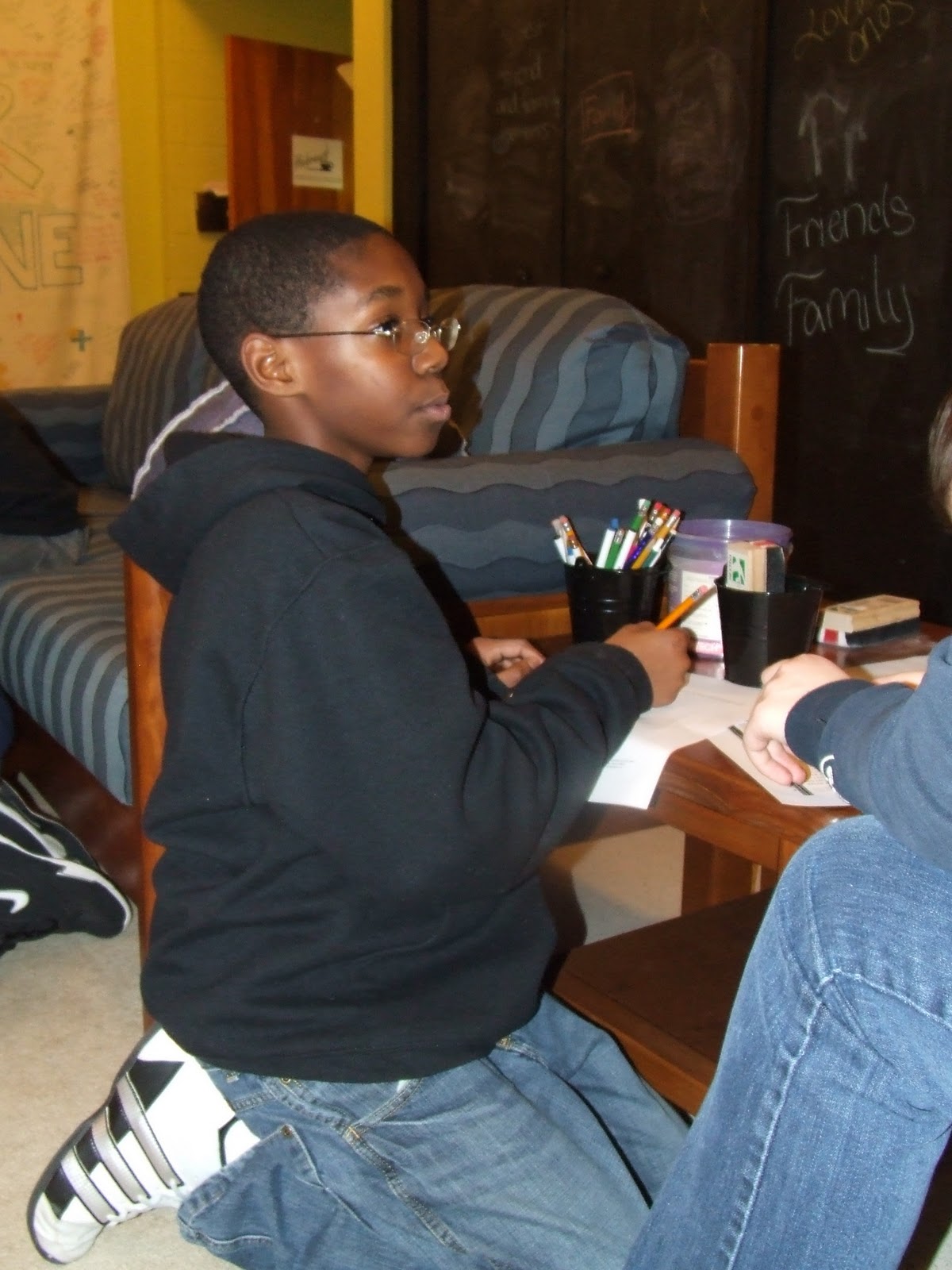
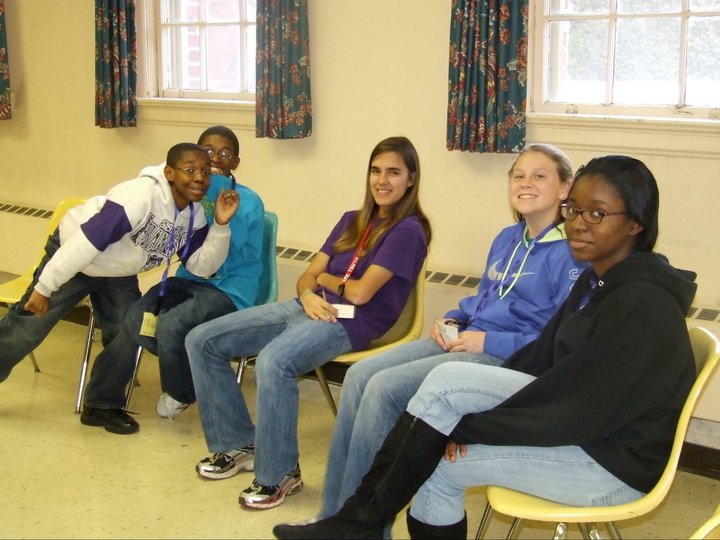
This week in our series "Drama & Dedication: The Life of the Prophets" we discussed the prophet Hosea. Like Amos, Hosea was also called to deliver a message to the Northern kingdom of Israel. While Amos' message to the Iraelites was of God's demand for justice and righteousness, Hosea's message to the Israelites was of God's demand for faithfulness. God not only called Hosea to deliver this message to Israel, but to also personally understand how deep God's love is for Israel. God told Hosea to marry a prostitute (Gomer) who would inevitably be an unfaithful wife, and when she strayed from their relationship, Hosea was to take her back as his wife and continue to love and forgive her.
So we see this parallel with Hosea's relationship with Gomer and God's relationship with Israel. God loved and chose Israel, but Israel kept rejecting God and being unfaithful. But, God continued to love and forgive Israel even through their unfaithfulness. So through Hosea, God pronounced judgment on Israel for their sin and declared that repentance is the only road to reconciliation. We learn from Hosea's story, then, that God desires us to repent of our sins and be reconciled to God. And that God's love for us is unconditional. NOTHING we do will ever separate us from the love of God, because just like the Israelites, God will pursue us and love us even when we have strayed from our relationship with God.
In response, we each took a piece of paper and wrote down one thing we can do this week to begin strengthening our commitment and faithfulness to God. Maybe it is praying daily, reading the Bible or being more thankful for the blessings in our lives. Whatever it may be, we wrote it down and committed ourselves to it this week and hope to make it a habit in our lives beyond this week.
So, what will you commit to doing this week to help strengthen your commitment and faithfulness to God? Comment on this post with your responses!
We spent the rest of the evening playing Hide & Seek--reminding us while we had fun that God constantly seeks out the lost and unfaithful.
Wednesday, January 19, 2011
Friday, January 14, 2011
Week 2: Amos
For our second week in our new series: "Drama & Dedication: The Life of the Prophets" we took a look at the prophet Amos. Amos was from Judah, the southern kingdom when Israel split, and God called Amos to go deliver a message to Israel, the northern kingdom. At this time Israel was known for its great wealth and unjust behaviors (read Amos 2:6-16). Amos' job was to deliver God's call for Israel to repent and change their ways. Israel didn't take this so well, and ended up NOT repenting (unlike the Ninevites we talked about last week). So, not long after that Israel fell to the Assyrian army, and the ten tribes were exiled throughout the region--never again to be joined as a kingdom, just as Amos had prophesied.
We spent time talking more deeply about social injustices. We talked about how Christians and non-Christians can be guilty of unjust behaviors. We also talked about how the church is often guilty of social injustices, but that the church should play a role in helping bring about reconciliation and healing to those social injustices. So how does God still speak to us today through the story of the prophet Amos?
We learn that God calls us to:
-Live justly and righteously.
-Treat others kindly and fairly.
-Don't let material possessions divert your attention from relationships with others and with God.
-Make sure God is a priority in your life rather than just a Sunday morning pit stop.
In response to what we learned, we realized that one way we can treat others kindly and show God's love to them is through acts of hospitality. So, for the rest of our time together, we baked mini loaves of bread to be offered to visitors of our church on Sunday mornings! What is one way you seek to live justly and righteously? Comment on this post with your responses.
We spent time talking more deeply about social injustices. We talked about how Christians and non-Christians can be guilty of unjust behaviors. We also talked about how the church is often guilty of social injustices, but that the church should play a role in helping bring about reconciliation and healing to those social injustices. So how does God still speak to us today through the story of the prophet Amos?
We learn that God calls us to:
-Live justly and righteously.
-Treat others kindly and fairly.
-Don't let material possessions divert your attention from relationships with others and with God.
-Make sure God is a priority in your life rather than just a Sunday morning pit stop.
In response to what we learned, we realized that one way we can treat others kindly and show God's love to them is through acts of hospitality. So, for the rest of our time together, we baked mini loaves of bread to be offered to visitors of our church on Sunday mornings! What is one way you seek to live justly and righteously? Comment on this post with your responses.
Thursday, January 13, 2011
2011 Farmville District Winter Retreat
We had a great time at the district winter retreat this past weekend! We learned about God's "Epic Truth" in John 14:6 where Jesus says "I am the way and the truth and the life. No one comes to the Father except through me." We explored this theme in worship with a praise band and Rev. Rob Woodfin:
We explored this "Epic Truth" in workshops:
We spent time in small groups:
We went to a concert by the band True Liberty:
And we enjoyed free time with activities like swimming, basketball, games and dancing:
Overall, we had a lot of fun and we grew spiritually from the experience. We hope you will join us next year!
Tuesday, January 4, 2011
"Drama & Dedication: The Life of the Prophets"
We began our new series "Drama & Dedication: The Life of the Prophets" this Sunday! Throughout this series we will take a look at ten of the Old Testament Prophets. For our first week, we took a look at Jonah, who some call the "unprophet". We usually think of prophets as people who did whatever God asked them...but Jonah was a little different. When God told Jonah to go to Nineveh and preach repentance, Jonah ran in the opposite direction. Eventually, he finally makes it to Nineveh (after enduring a storm, being thrown overboard on a ship, and living in the belly of a fish for three days), but it would have been a lot quicker and probably easier if he had just gone straight to Nineveh from the beginning.
We discussed how we are often like Jonah--running away from God's instrustions for us. We take the longer route and often end up enduring more hardships and wasting a lot more energy than if we had simply done what God had asked us from the start. We split into middle and high school groups and dug a little deeper into some of God's instructions for our lives, such as loving our enemies and praying for those who persecute us (Matthew 5:43-48), obeying our parents and honoring our father and mother (Ephesians 6:1-3), listening and following the Word of God (James 1:22-26), loving our neighbors and not showing favoritism (James 2:1-9), and living in harmony with one another and being compassionate and humble (1 Peter 3:8-17). We talked about how when we avoid God's instructions, it can have many negative effects on both ourselves and those around us.
Ultimately, Jonah's story is about God's love being for EVERYONE, not just some. The Ninevites were nasty mean people, yet they repented and God extended his love to them rather than destroying them. Even after Jonah finally made it to Ninevah and was successful in conveying God's message to the Ninevites, Jonah still didn't believe that God could truly love those people. Jonah sat there waiting for God to destroy the city. But God "had compassion and did not bring upon them the destruction he had threatened" (Jonah 3:10).
As a challenge for the week, we each wrote down the name of someone we know who could really use God's grace and love. It may have been someone who is really mean like the Ninevites. It may have been someone who is hurting or suffering and needs to hear about God's love for them. I challenged the students, and now I'm challenging you, to put that slip of paper with the person's name on it somewhere where you will see it every day this week. Maybe put it under your pillow, or on your bathroom mirror, or on your bedroom door. Put it some place that you look every day. Then, every time you see that name, pray for that person. Also, I want you to commit to finding a way to show that person God's love this week. Maybe it is by smiling at them or giving them a hug. Maybe it's inviting them to church next Sunday, or sitting with them at lunch. Maybe its helping them with homework or work. Whatever it is, find a way to show them God's love this week, being careful not to be like Jonah and run in the opposite direction of what God is calling you to do for this person.
So, I'm wondering, what are some things you are thinking about doing in order to show God's love for that particular person this week? Comment on this post with your answers.
See you next week as we take a look at the prophet Amos!
We discussed how we are often like Jonah--running away from God's instrustions for us. We take the longer route and often end up enduring more hardships and wasting a lot more energy than if we had simply done what God had asked us from the start. We split into middle and high school groups and dug a little deeper into some of God's instructions for our lives, such as loving our enemies and praying for those who persecute us (Matthew 5:43-48), obeying our parents and honoring our father and mother (Ephesians 6:1-3), listening and following the Word of God (James 1:22-26), loving our neighbors and not showing favoritism (James 2:1-9), and living in harmony with one another and being compassionate and humble (1 Peter 3:8-17). We talked about how when we avoid God's instructions, it can have many negative effects on both ourselves and those around us.
Ultimately, Jonah's story is about God's love being for EVERYONE, not just some. The Ninevites were nasty mean people, yet they repented and God extended his love to them rather than destroying them. Even after Jonah finally made it to Ninevah and was successful in conveying God's message to the Ninevites, Jonah still didn't believe that God could truly love those people. Jonah sat there waiting for God to destroy the city. But God "had compassion and did not bring upon them the destruction he had threatened" (Jonah 3:10).
As a challenge for the week, we each wrote down the name of someone we know who could really use God's grace and love. It may have been someone who is really mean like the Ninevites. It may have been someone who is hurting or suffering and needs to hear about God's love for them. I challenged the students, and now I'm challenging you, to put that slip of paper with the person's name on it somewhere where you will see it every day this week. Maybe put it under your pillow, or on your bathroom mirror, or on your bedroom door. Put it some place that you look every day. Then, every time you see that name, pray for that person. Also, I want you to commit to finding a way to show that person God's love this week. Maybe it is by smiling at them or giving them a hug. Maybe it's inviting them to church next Sunday, or sitting with them at lunch. Maybe its helping them with homework or work. Whatever it is, find a way to show them God's love this week, being careful not to be like Jonah and run in the opposite direction of what God is calling you to do for this person.
So, I'm wondering, what are some things you are thinking about doing in order to show God's love for that particular person this week? Comment on this post with your answers.
See you next week as we take a look at the prophet Amos!
Tuesday, December 21, 2010
The Advent Experience: Waiting in Joy
I can't believe this was the last Sunday of Advent! To finish our series "The Advent Experience" and our focus on waiting and preparing our hearts for Christmas, we had a Christmas party as we "waited in joy!" We played the Christmas song picture game where you have to figure out the Christmas song based on a picture puzzle. We listened to Christmas music and ate a bunch of delicious snacks (thanks to the many church members who provided treats for our party!). We had a white elephant gift exchange with presents like candy, McDonald's gift cards, mugs, a blanket, homemade bread, binoculars, bottle tops for canned drinks, and even a ball that bounces itself! We even split into four groups and played a game where each group had to wrap one of their members up like a present. The team with the best wrapping job won! Check back for pictures of a fun night at FUSION Gathering. Merry Christmas!
Remember, we will NOT be meeting next week, December 26th. See you all again when we resume our weekly Gathering meetings on January 2nd at 7pm.
Friday, December 17, 2010
Christmas Party
Don't forget:
THIS Sunday is our FUSION Christmas Party!
Bring a friend and a gift ($5 or less) for our gift exchange.
Come and enjoy snacks and games in addition to our gift exchange.
The Advent Experience: Waiting in Prayer
This week at FUSION Gathering we focused on waiting in prayer. As a group we traveled to different places around the church and participated in several prayer experiences. We sang Christmas carols and read different parts of the Christmas story in Scripture at each prayer station. Then, we had a different prayer experience at each station. At the first station we prayed about people, places or situations we would like to lift up in prayer, wrote those things on strips of construction paper and then stapled them together to form a prayer chain.
At the next station, we talked about how many people write letters to Santa this time of year. Instead, however, we wrote letters God...sharing our hopes and fears, our joys and our sorrows as we sat under the Chrismon tree in the sanctuary. Once we were done, we sealed our letters in an envelope and placed them at the base of the cross on the altar, knowing that God has already read our words and is present with us in those things we wrote about.
At the next prayer station, we read about the angels appearing to the shepherds. We made angel ornaments to hang on our Christmas trees to remind us of the angels who proclaimed the good news that Jesus had been born. We, too, are called to proclaim the good news!
At the last prayer station, we prayed about what character(s) in the nativity scene we most identified with right now. Maybe it was the worried but joyous Mary or Joseph. Maybe it was the anxious and excited shepherds, making their way to see the baby who had been born. Maybe it was the magi who had journeyed far in order to see the holy family. Maybe it was the angels who were proclaiming the good news. Or maybe it was the animals who may have been wondering at the spectacle that was happening in their stable. After praying about it, each person was invited to color and write their name on that character and place it in the nativity scene, symbolically entering into the Christmas story themselves.
Throughout the prayer stations and experiences, we were able to dig a little deeper into the Christmas story and discover various ways of praying as we wait and prepare our hearts for the birth of our Savior, Jesus Christ.
At the next station, we talked about how many people write letters to Santa this time of year. Instead, however, we wrote letters God...sharing our hopes and fears, our joys and our sorrows as we sat under the Chrismon tree in the sanctuary. Once we were done, we sealed our letters in an envelope and placed them at the base of the cross on the altar, knowing that God has already read our words and is present with us in those things we wrote about.
At the next prayer station, we read about the angels appearing to the shepherds. We made angel ornaments to hang on our Christmas trees to remind us of the angels who proclaimed the good news that Jesus had been born. We, too, are called to proclaim the good news!
At the last prayer station, we prayed about what character(s) in the nativity scene we most identified with right now. Maybe it was the worried but joyous Mary or Joseph. Maybe it was the anxious and excited shepherds, making their way to see the baby who had been born. Maybe it was the magi who had journeyed far in order to see the holy family. Maybe it was the angels who were proclaiming the good news. Or maybe it was the animals who may have been wondering at the spectacle that was happening in their stable. After praying about it, each person was invited to color and write their name on that character and place it in the nativity scene, symbolically entering into the Christmas story themselves.
Throughout the prayer stations and experiences, we were able to dig a little deeper into the Christmas story and discover various ways of praying as we wait and prepare our hearts for the birth of our Savior, Jesus Christ.
Subscribe to:
Posts (Atom)